
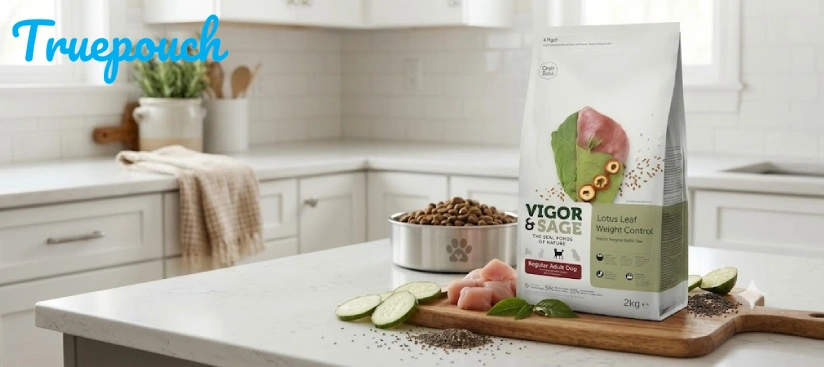
How Can Flat Bottom Pouches Meet Modern Retail Packaging Requirements?
Modern retail packaging must do more than protect a product. It needs to attract customers, communicate product information, support convenient storage, and maintain product quality throughout distribution and shelf display. As retail businesses adapt to changing consumer preferences and competitive market conditions, flexible packaging solutions are becoming an important part of product presentation. Among these solutions, flat bottom pouches offer a practical combination of stability, functionality, and visual appeal
Flat bottom pouches, also known as box pouches or block-bottom pouches, are designed with a flat base that allows the package to stand upright on shelves. Their structured shape provides multiple printable surfaces for branding and product information while helping retailers organize products more effectively. Depending on the selected material structure and design, these pouches can be developed for food products, snacks, coffee, pet food, dry ingredients, and several non-food applications.
Truepack Flexibles helps businesses explore flexible packaging solutions that align with product requirements, retail presentation goals, and packaging performance expectations. Understanding how flat bottom pouches address modern retail needs can help brands make informed packaging decisions.
What Are Flat Bottom Pouches?
Flat bottom pouches are flexible packaging bags designed with a stable, flat base and side gussets that create a box-like appearance when filled. Unlike conventional flat bags, their bottom structure helps them stand upright, making them suitable for retail environments where visibility and organized shelf placement are important.
These pouches can incorporate different packaging materials, barrier layers, closures, and printing options according to the product being packed. Their construction can also be customized based on the required filling process, package size, storage conditions, and distribution requirements.
Key features of flat bottom pouches include:
- Stable base design: Helps the filled package stand upright on retail shelves.
- Multiple branding surfaces: Provides space for product names, graphics, ingredients, instructions, and other relevant information.
- Flexible material options: Allows packaging structures to be selected according to product protection requirements.
- Customizable sizes: Supports different product weights, volumes, and packaging formats.
- Optional closures: May include resealable zippers, tear notches, or other opening features where appropriate.
- Efficient product presentation: Creates a structured appearance without requiring a fully rigid container.
The exact performance of a flat bottom pouch depends on its design, materials, seals, filling method, and intended application.
How Can Flat Bottom Pouches Meet Modern Retail Packaging Requirements?
Flat bottom pouches can meet several modern retail packaging requirements by combining shelf stability, product protection, clear communication, convenient handling, and flexible branding opportunities. Their suitability depends on selecting the correct pouch construction for the product, retailer, and distribution environment.
The following factors explain why businesses consider flat bottom pouches for retail packaging.
1. Improved Shelf Stability and Product Visibility
Retail shelves need packaging that can be displayed neatly and remain upright during normal handling. The flat base of a flat bottom pouch provides a stable foundation when the package is filled appropriately.
This design can help brands present products in a more organized and consistent way across supermarket shelves, specialty stores, convenience stores, and other retail outlets.
Benefits include:
- Helps products stand upright instead of lying flat.
- Supports a clean and organized shelf arrangement.
- Makes front-facing product graphics easier to display.
- Helps shoppers identify products when packages are positioned correctly.
- Creates a structured appearance that can complement premium product positioning.
Shelf stability still depends on the product's weight distribution, pouch dimensions, fill volume, and bottom construction. Packaging trials are useful before large-scale production.
2. Strong Branding and Product Differentiation
Packaging often creates the first visual connection between a brand and a potential customer. In competitive retail categories, businesses need packaging that communicates product identity quickly and consistently.
Flat bottom pouches provide multiple surfaces that can be used for branding, product descriptions, illustrations, and promotional messages. The front panel can highlight the product name, while the back panel can accommodate ingredients, usage instructions, storage guidance, and other required information.
Brands can use these surfaces to:
- Maintain consistent brand colours and visual identity.
- Highlight product varieties, flavours, or distinguishing features.
- Present logos and product descriptions clearly.
- Support premium, everyday, or specialty product positioning.
- Create a recognizable appearance across different product sizes.
For businesses launching new products, customized flat bottom pouch packaging can help establish a distinct shelf presence. Artwork should remain readable at the actual package size, and all product claims should be accurate and properly substantiated.
3. Product Protection and Shelf-Life Considerations
Retail packaging must protect products against conditions that may affect their quality during storage, transport, and display. Depending on the product, relevant risks may include moisture, oxygen, light, odours, contamination, or physical damage.
Flat bottom pouches can be manufactured using suitable flexible packaging structures selected for the product's protection needs. Barrier performance varies according to the materials, layer thicknesses, seals, and manufacturing quality.
Important considerations include:
- Moisture resistance: Useful for products that can absorb moisture or lose their intended texture.
- Oxygen barrier: May help protect products that are sensitive to oxidation.
- Light protection: Appropriate material or printing choices can help reduce light exposure when required.
- Seal integrity: Proper sealing helps protect the packaged product against leakage and environmental exposure.
- Product compatibility: Materials must be suitable for the contents and intended storage conditions.
For example, roasted coffee may require protection against oxygen and moisture, while dry snacks may need a structure that helps preserve crispness. The correct specification should be determined through product testing and technical evaluation rather than pouch shape alone.
4. Convenient Opening and Resealing
Consumer convenience is another important retail packaging requirement. Customers often prefer packaging that is easy to open, practical to handle, and suitable for storing unused product portions.
Flat bottom pouches can incorporate optional features that improve usability, depending on the product and package size.
Common options include:
- Resealable zippers for repeated access.
- Tear notches for easier initial opening.
- Appropriate opening positions for convenient dispensing.
- Custom pouch dimensions for comfortable handling.
- Additional closures or dispensing features for selected applications.
Resealable packaging can be useful for products such as coffee, nuts, dry fruits, snacks, and pet food. However, a resealable zipper does not automatically make a pouch airtight or guarantee extended shelf life after opening. The closure and complete packaging structure must be evaluated for the intended application.
5. Clear Product Information and Retail Compliance
Modern retail packaging must provide consumers with accurate and readable information. Requirements vary by product category, destination market, and applicable regulations.
Flat bottom pouches offer several panels where businesses can organize the information relevant to their products. Effective information placement improves readability and supports informed purchasing decisions.
Depending on the product and market, packaging information may include:
- Product name and description.
- Net quantity or declared weight.
- Ingredient list and allergen declarations, where applicable.
- Nutritional information, where required.
- Manufacturing, packing, batch, or traceability details, as applicable.
- Manufacturing or expiry information where required.
- Storage and handling instructions.
- Manufacturer, packer, or marketer details, as applicable.
- Retail barcode and other required identification details.
- Applicable recycling, disposal, or regulatory information.
In India, businesses selling packaged goods should assess applicable requirements under the Legal Metrology framework, food labelling rules where relevant, and other product-specific regulations. Requirements can differ according to the product and current legal provisions, so packaging artwork should be reviewed before printing.
6. Flexible Packaging for Different Product Categories
Flat bottom pouches are adaptable to a range of retail products because their dimensions, material structures, and features can be customized. The most suitable construction depends on the product's weight, shape, sensitivity, and storage requirements.
Common applications include:
Food and snack products
- Chips and selected dry snacks.
- Nuts and dry fruits.
- Coffee and tea.
- Cereals and dry mixes.
- Spices and selected powdered ingredients.
- Pet food and treats.
Non-food products
- Selected household products.
- Garden and agricultural products.
- Certain industrial powders or granules.
- Specialty products requiring flexible packaging.
Not every product is suitable for the same pouch design. Sharp contents, heavy products, liquids, hazardous substances, or products requiring specialized containment may need different structures or additional testing.
7. Space-Efficient Storage and Distribution
Packaging efficiency matters throughout the supply chain, from manufacturing and warehousing to transportation and retail replenishment. Flat bottom pouches are flexible when empty, which can help reduce the storage space required compared with preformed rigid containers.
Potential operational benefits include:
- Efficient storage of unfilled packaging.
- Flexible sizing for different product quantities.
- Convenient handling during packaging operations.
- Support for organized case packing and distribution.
- Potentially lower packaging material use than certain rigid alternatives.
Actual savings depend on pouch specifications, product density, packing efficiency, carton design, shipping conditions, and order volumes. Filled pouches still require suitable secondary packaging and protection against compression, punctures, and handling damage.
8. Sustainability and Responsible Material Selection
Sustainability has become an important consideration for brands, retailers, and consumers. However, environmentally responsible packaging requires a careful evaluation of material selection, product protection, waste management, and local recycling infrastructure.
Flat bottom pouches can be explored with different material structures, including selected recyclable designs where appropriate collection and processing systems exist. Some packaging applications may require multilayer structures to achieve the necessary barrier performance, which can complicate recycling.
Brands should consider:
- Whether a recyclable material structure is technically suitable.
- The availability of collection and recycling systems in the target market.
- The potential use of materials with recycled content where permitted and suitable.
- The amount of packaging needed to protect the product.
- The risk of product loss if the packaging does not provide sufficient protection.
- Applicable packaging waste and environmental regulations.
Environmental claims should be specific, verifiable, and supported by evidence. A flexible pouch should not automatically be described as sustainable, recyclable, or environmentally friendly without confirming its actual material composition and disposal pathway.
Which Features Should Businesses Consider When Choosing Flat Bottom Pouches?
Selecting the right flat bottom pouch involves matching the package design with the product, production process, and retail requirements.
Businesses should evaluate the following points before finalizing a packaging specification:
- Product characteristics: Identify the product's weight, dimensions, moisture sensitivity, oxygen sensitivity, and other relevant properties.
- Pouch capacity: Choose a size that accommodates the intended net quantity without creating excessive empty space or compromising stability.
- Material structure: Select appropriate layers and barrier properties based on product protection needs and intended shelf life.
- Closure requirements: Decide whether a zipper, tear notch, or other opening feature is necessary.
- Printing and artwork: Plan readable text, product graphics, brand identity, barcodes, and required declarations.
- Filling equipment: Confirm that pouch dimensions and opening design are compatible with the filling and sealing process.
- Distribution conditions: Consider stacking, transport, storage temperature, handling, and potential compression.
- Regulatory requirements: Review applicable labelling, packaging, and material-contact rules before production.
- Quality testing: Assess seal strength, leakage where relevant, barrier performance, and package durability.
- Total packaging cost: Compare material, printing, conversion, filling efficiency, transport, and wastage rather than considering unit price alone.
This evaluation helps businesses select packaging that meets functional needs while supporting their commercial goals.
Flat Bottom Pouches vs. Other Retail Packaging Formats
Different packaging formats serve different purposes. Flat bottom pouches may be suitable when brands need a structured shelf appearance and flexible packaging construction, while other formats may offer advantages for particular products.
- Flat bottom pouches: Provide a flat base, multiple branding surfaces, and customizable flexible structures. They are often considered for dry foods, coffee, snacks, and pet food.
- Stand-up pouches: Use a bottom gusset to stand upright and may offer a simpler format for various flexible packaging applications. Their appearance and usable panel area differ according to design.
- Three-side-seal pouches: Have sealed edges on three sides and are often used for individual portions or products requiring a compact pack format.
- Rigid containers: Bottles, jars, tubs, and boxes may provide greater structural rigidity or be better suited to certain liquids, fragile products, and dispensing requirements.
The right choice depends on product protection, shelf presentation, consumer convenience, machinery compatibility, cost, and end-of-life considerations. A flat bottom pouch is not automatically superior to every alternative; it is one option within a broader packaging strategy.
How Can Retail Brands Improve Flat Bottom Pouch Packaging?
Businesses can improve packaging performance by combining thoughtful design with technical validation and consumer-focused communication.
Recommended practices include:
- Keep the primary product name prominent and easy to read.
- Use consistent brand elements across different product variants.
- Prioritize the most important product information on visible panels.
- Select materials based on actual product protection requirements.
- Consider resealable features when consumers may use the product in multiple portions.
- Test the filled pouch for stability, seal integrity, and handling performance.
- Confirm compatibility with existing filling and packaging machinery.
- Review artwork for spelling, barcode readability, and mandatory declarations.
- Evaluate realistic recycling and disposal options before making environmental claims.
- Gather feedback from retailers and consumers before committing to large production quantities.
A successful retail package balances appearance, protection, convenience, compliance, and cost. Each element should support the product's intended market and customer expectations.
Frequently Asked Questions (FAQs)
1. What are flat bottom pouches used for?
Flat bottom pouches are used for packaging products that benefit from an upright display and flexible packaging construction. Common applications include coffee, tea, snacks, nuts, dry fruits, cereals, selected powdered products, and pet food. The suitable pouch structure depends on the product's weight, protection requirements, and storage conditions.
2. Why are flat bottom pouches suitable for modern retail packaging?
Flat bottom pouches can support modern retail needs through their stable base, multiple printable panels, customizable dimensions, and optional resealable closures. These features can improve shelf presentation, brand communication, and consumer convenience when matched to the intended application.
3. Can flat bottom pouches help extend product shelf life?
They can help preserve product quality when manufactured using materials and seals appropriate for the product's barrier requirements. Shelf life also depends on the product formulation, filling conditions, storage environment, and package integrity. Actual shelf-life claims should be supported by suitable testing.
4. Are flat bottom pouches available with resealable zippers?
Yes, flat bottom pouches can be designed with resealable zippers where the pouch construction and application permit. Zippers allow consumers to reopen and close the package, but they do not automatically guarantee an airtight seal or maintain the original shelf life after opening.
5. Are flat bottom pouches suitable for food packaging?
They can be suitable for many food applications, including dry snacks, coffee, tea, nuts, and other products, provided the packaging materials are appropriate for the food and intended conditions of use. Businesses should verify applicable food-contact, labelling, and packaging requirements.
6. Can flat bottom pouches be customized with printed branding?
Yes, printing and artwork can be tailored to the pouch design, subject to the supplier's available printing capabilities. Brands can use the available panels for logos, product names, product information, graphics, and required declarations.
7. Are flat bottom pouches environmentally friendly?
Their environmental performance depends on the material structure, amount of material used, product protection, collection infrastructure, and available recycling processes. Some designs may be recyclable in suitable systems, but businesses should verify the specific packaging construction and avoid unsupported environmental claims.
8. How do flat bottom pouches differ from stand-up pouches?
Both formats can stand upright when filled. Flat bottom pouches generally use a flat base and a box-like structure, while stand-up pouches commonly rely on a bottom gusset. Their capacity, shelf appearance, printable area, and production requirements vary according to the specific design.
9. What should businesses check before ordering flat bottom pouches?
Businesses should confirm pouch dimensions, product compatibility, material barriers, closure options, artwork, regulatory declarations, filling-machine compatibility, order quantity, and quality-testing requirements. Testing representative filled packages before mass production can help identify design or performance issues.
10. Where can businesses enquire about flat bottom pouch packaging?
Businesses can contact Truepack Flexibles to discuss their flexible packaging requirements and determine the suitability of flat bottom pouch designs for their products. They should provide details about the product, required capacity, protection needs, printing, and intended retail application to support the specification process.
