
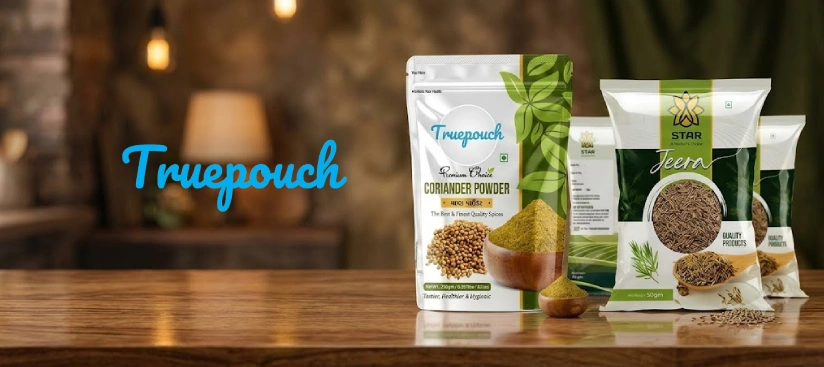
What Makes Digital Printed Pouches Suitable for Customised Packaging Solutions?
Digital printed pouches allow brands to print packaging artwork directly from digital design files without the conventional plate or cylinder preparation required by traditional printing methods. This can make customised designs, short production runs, multiple product variants, seasonal packaging, and artwork changes more practical. However, the final cost and suitability depend on order quantity, pouch structure, material, printing technology, finishing requirements, and production specifications.
Truepack Flexibles Pvt. Ltd. (True Pouch) lists flexible printed and laminated packaging solutions, including different pouch formats, materials, and finishes. Businesses can enquire about suitable packaging options based on their products, artwork, quantities, and storage requirements.
What Are Digital Printed Pouches?
Digital printed pouches are flexible packaging products printed using artwork supplied in a digital file. The design can include brand logos, product photographs, colours, ingredients, instructions, promotional messages, and other product information.
The process generally involves preparing artwork, reviewing a digital proof, printing on a suitable packaging substrate, and converting the printed material into the required pouch format. Depending on the construction, lamination, sealing, cutting, and quality checks may also be necessary.
Unlike conventional gravure printing, which uses engraved cylinders, digital printing generally avoids the need for conventional printing cylinders or plates. However, it does not eliminate material preparation, pouch converting, finishing, or quality checks.
Artwork approval is important: Businesses should check spelling, colours, dimensions, product information, and regulatory details before authorising production.
Why Are Digital Printed Pouches Suitable for Customised Packaging?
1. Flexible Packaging Design
Digital printing can help brands customise colours, graphics, logos, product photographs, and information to suit their brand identity. For example, a coffee business can create a different design for each blend while maintaining a consistent visual style across its product range.
Print quality depends on the technology, artwork resolution, material surface, colour management, and finishing process.
2. Multiple Product Variants
Businesses selling different flavours, sizes, ingredients, or product categories can prepare separate artwork versions. Examples include spice varieties, snack flavours, dry-fruit mixes, and regional-language packaging.
Depending on the printing system and production plan, these designs may be produced without requiring separate conventional cylinders for every version. Confirm how the supplier handles multiple designs and quantities per design.
3. Short-Run Production
Digital printing may suit startups, product launches, test marketing, and limited-edition packaging when businesses do not want to order large quantities immediately.
For example, a brand testing a new snack flavour can order a smaller batch, assess demand, and plan future production based on customer response. Minimum order quantities still depend on the supplier, pouch format, material, and manufacturing process.
4. Faster Artwork Changes
When a product name, ingredient list, logo, or promotional message changes, digital artwork can often be revised without preparing new conventional printing cylinders or plates.
This can simplify certain pre-press steps, but it does not guarantee immediate production. Printing, lamination, pouch conversion, quality checks, order volume, and dispatch all affect the delivery schedule.
5. Personalised and Promotional Packaging
Digital printing may support festival editions, regional campaigns, limited-time offers, and product launch promotions. Some suitable systems can also print variable content, such as unique QR codes or promotional codes.
Any codes must be generated, tested, and linked to the correct destination. A printed QR code does not automatically provide product authentication or traceability without an appropriate supporting system.
6. Reduced Initial Setup Costs
Conventional printing may involve upfront cylinder or plate expenses. Digital printing generally avoids these conventional components, potentially making short runs and frequent design changes more economical.
However, digital printing is not always cheaper per pouch. For large, repeat production runs, conventional printing may offer a lower unit cost. Businesses should compare complete quotations for equivalent specifications.
Which Businesses Can Benefit from Digital Printed Pouches?
Digital printed pouches may be suitable for several industries, depending on the product and packaging requirements.
- Food and snack brands: Chips, biscuits, dry fruits, nuts, and bakery products.
- Spices and dry-food businesses: Spice powders, seasonings, rice, pulses, and grains.
- Pet food brands: Suitable pet food products requiring appropriate barrier protection.
- Personal-care and cosmetic businesses: Selected refills, powders, and compatible products.
- Agricultural businesses: Seeds, fertilisers, and other speciality products.
- Startups and direct-to-consumer brands: Small launches, market testing, and customised product ranges.
- Seasonal product businesses: Festival packs, promotional editions, and limited-time campaigns.
Each application needs a suitable packaging structure, seal design, barrier performance, and compatibility assessment. Food-contact suitability and expected shelf life must be verified for the intended product.
What Types of Customisation Are Possible with Digital Printed Pouches?
Depending on the manufacturer's capabilities, businesses may customise:
- Brand logos, colours, and visual identity.
- Product names, images, and product-specific graphics.
- Separate artwork for flavours, sizes, and product variants.
- Regional-language versions.
- Promotional messages and limited-edition designs.
- QR codes and campaign-specific information.
- Front and back panel layouts.
- Matte, gloss, or other available finishes.
- Pouch dimensions and formats where supported.
Printing customisation and physical pouch construction are separate considerations. Features such as zippers, tear notches, transparent windows, gussets, spouts, and barrier layers depend on the design, material structure, and manufacturer's capabilities.
How Can Digital Printed Pouches Help Businesses Manage Packaging Inventory?
Smaller or more flexible production runs may help businesses align packaging purchases with actual demand. Potential benefits include:
- Avoiding excessive orders before a product launch.
- Testing new packaging designs before scaling up.
- Managing multiple product variants.
- Reducing the risk of holding outdated artwork.
- Aligning packaging orders with seasonal campaigns.
These benefits are not guaranteed. Inventory costs depend on ordering patterns, storage practices, supplier lead times, production yield, and customer demand.
What Should You Check Before Ordering Digital Printed Pouches?
Use this checklist before confirming an order:
- Confirm the product type and intended application.
- Specify the required pouch size and format.
- Check material structure and barrier requirements.
- Confirm the quantity needed for each design.
- Review print quality and colour expectations.
- Check artwork file requirements and approve the proof.
- Verify compatibility with filling and sealing equipment.
- Confirm lamination and seal-strength requirements.
- Request applicable food-contact or other compliance documentation.
- Check finishing options and additional pouch features.
- Agree on the production and delivery schedule.
- Review the total cost, including printing, conversion, taxes, and shipping.
Request samples and technical information before placing a large order, especially when packaging performance affects product freshness or shelf life.
How Do You Choose a Digital Printed Pouch Manufacturer in India?
Assess potential suppliers based on their flexible packaging experience, verified printing capabilities, available materials, pouch formats, and quality-control procedures.
Also check whether the supplier can accommodate your required quantities, maintain acceptable colour consistency, provide material guidance, and supply relevant technical or compliance documentation.
Ask for a written quotation that clearly defines specifications, quantities, artwork changes, delivery terms, and procedures for handling quality concerns. Compare suppliers on material suitability, service, quality, and total cost rather than price alone. Avoid relying on unverified claims about certifications, production capacity, or delivery guarantees.
Digital Printed Pouches from Truepack
Truepack Flexibles Pvt. Ltd., through its True Pouch website, lists flexible printed and laminated packaging solutions. Its published product range includes stand-up pouches, centre-seal pouches, three-side-seal pouches, side-gusset pouches, four-panel pouches, flat-bottom pouches, spout pouches, quad-seal pouches, and film rolls. The website also describes material and finish options, including PET and multilayer lamination, matte and glossy finishes, and selected zipper pouch options.
For specific digital printing requirements, businesses should confirm the available printing technology, compatible material structures, pouch formats, and minimum order quantity directly with the company.
When requesting a quotation, provide the product category, pouch dimensions, artwork requirements, material specifications, quantity per design, desired finish, shelf-life expectations, and delivery location. Ask about samples, proof approval, and relevant material documentation before authorising production.
Frequently Asked Questions
1. What Are Digital Printed Pouches?
Digital printed pouches are flexible packaging products printed using artwork supplied in digital form. They can display brand logos, product images, colours, instructions, and other product information. Their suitability depends on the printing system, packaging material, pouch format, intended application, and order requirements.
2. Why Are Digital Printed Pouches Suitable for Customised Packaging?
They can make artwork changes, multiple product designs, short production runs, and promotional packaging more practical. Brands can create different designs for flavours, sizes, or regional markets. The final benefits depend on the printing technology, material, quantity, finishing requirements, and manufacturer's capabilities.
3. Are Digital Printed Pouches Suitable for Small Businesses and Startups?
They may suit small businesses launching products, testing market demand, or producing limited-edition packaging. Digital printing can reduce reliance on conventional cylinder or plate preparation. However, minimum order quantities and other production charges still apply, so businesses should request samples and a written quotation.
4. Can Digital Printing Accommodate Multiple Product Designs?
Yes, some digital printing systems can accommodate different artwork versions within a production plan. This can help brands create separate packaging for flavours, sizes, languages, or product categories. The number of designs, quantity per design, production arrangement, and any additional charges should be confirmed with the supplier.
5. Are Digital Printed Pouches Cheaper Than Conventional Printed Pouches?
Not always. Digital printing may reduce upfront cylinder or plate expenses and suit shorter runs. Conventional gravure printing can be more economical for certain large-volume orders because setup costs are spread across more units. Compare itemised quotations for the same material, format, quantity, and finishing.
6. Can Digital Printed Pouches Be Used for Food Packaging?
They may be suitable when the complete packaging structure, inks, seals, and materials meet the food product's requirements and applicable regulations. Barrier performance must match the product's sensitivity to moisture, oxygen, light, and other factors. Request relevant documentation before approving food packaging.
7. Which Pouch Formats Can Be Digitally Printed?
Depending on the supplier and printing system, formats may include stand-up, three-side-seal, centre-seal, side-gusset, flat-bottom, zipper, and spout pouches, along with printed roll stock. Confirm that the required physical format and material structure are compatible with the supplier's digital printing process.
8. Can Businesses Change Packaging Artwork Without New Printing Plates?
Digital printing generally avoids the conventional plates or cylinders used by traditional processes, so artwork can often be revised without preparing new conventional printing components. However, proof approval, material requirements, production setup, and other charges may still apply. Confirm the supplier's revision and pricing policy.
9. What Should Businesses Consider Before Ordering Digital Printed Pouches?
Check pouch dimensions, material structure, barrier properties, order quantity, print quality, artwork approval, filling equipment compatibility, sealing performance, and applicable compliance requirements. Also confirm the total quotation and delivery schedule. Samples and technical documentation can help businesses evaluate suitability before placing a larger order.
10. How Can I Choose a Digital Printed Pouch Manufacturer in India?
Review the supplier's verified capabilities, product range, material options, samples, quality procedures, technical documentation, order quantities, and delivery terms. Ask how artwork changes and repeat orders are handled. Compare complete quotations using equivalent specifications rather than choosing solely on the lowest unit price.
11. What Is the Difference Between Digital and Gravure Printing for Flexible Packaging?
Digital printing transfers artwork from digital files and generally avoids conventional engraved cylinders, making it useful for short runs and frequent design changes. Gravure printing uses engraved cylinders and can be cost-effective for high-volume repeat orders. The suitable method depends on quantity, design requirements, material, and overall cost.
12. How Can I Request Customised Packaging from Truepack Flexibles Pvt. Ltd. (True Pouch)?
Visit the company's contact page and share your product category, pouch size, material requirements, artwork, quantity per design, preferred finish, and delivery location. Ask about suitable formats, digital printing availability, samples, minimum quantities, and pricing. Confirm specifications and commercial terms in writing before approving production.
