
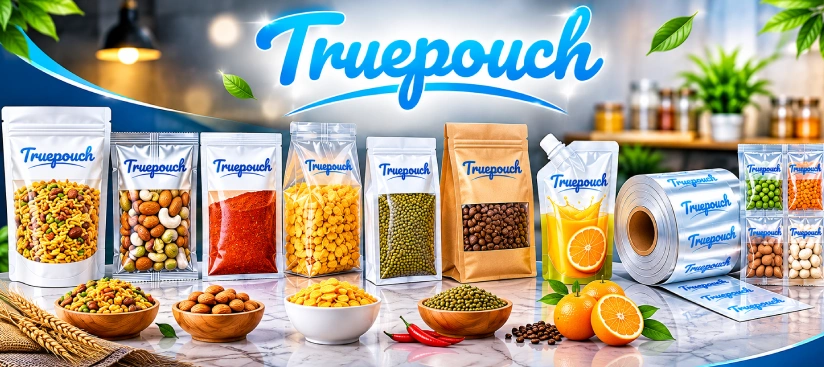
What Are the Key Benefits of Digital Printed Pouches for Modern Product Packaging?
Digital printed pouches allow brands to print packaging artwork directly from digital files, making it easier to customise designs, manage multiple product variants, update artwork, and produce smaller batches without the traditional printing plate or cylinder costs associated with conventional printing. Their suitability and cost benefits depend on order quantity, pouch structure, printing technology, material requirements, and production specifications.
Truepack Flexibles Pvt. Ltd. (True Pouch) offers flexible printed and laminated packaging solutions, including multiple pouch formats and packaging materials. Businesses looking for customised packaging can enquire about suitable pouch structures, printing options, samples, and quotations based on their products and order requirements.
What Are Digital Printed Pouches?
Digital printed pouches are flexible packaging products on which branding and product artwork are reproduced using a digital printing process. Designs can include company logos, product photographs, colours, ingredients, instructions, promotional messages, and other packaging information.
Key features include:
- Digital artwork printing: Packaging designs are prepared as digital files and sent for printing.
- Detailed graphics: Suitable systems can reproduce fine text, images, and complex colour combinations.
- Multiple designs: Businesses can prepare different artwork for product flavours, sizes, and categories.
- Simplified artwork updates: Approved designs can be revised when product information or branding changes.
- Flexible applications: Depending on the material and construction, digital printed packaging may be used for food, FMCG, agricultural, personal-care, and selected industrial products.
Actual print quality depends on the printing system, substrate, artwork resolution, ink compatibility, and finishing process.
What Are the Main Benefits of Digital Printed Pouches?
1. Customised Packaging Designs
Digital printing makes it easier to prepare distinct designs for different products. A snack brand, for example, could use separate graphics for chilli, tomato, and salted flavours while maintaining a consistent brand identity.
Businesses can revise colours, logos, product images, and product-specific information as their packaging requirements evolve. Final changes should always be checked and approved before production.
2. Lower Initial Setup Costs for Short Runs
Traditional printing may require cylinders or plates, creating upfront costs before printing begins. Digital workflows generally avoid these conventional printing components, which can make shorter runs and frequent artwork changes more practical.
However, digital orders may still involve artwork preparation, sampling, machine setup, pouch conversion, and other charges. Ask the manufacturer for an itemised quotation rather than assuming all setup costs are eliminated.
3. Flexible Order Quantities
Smaller production runs can help startups and established brands test packaging before committing to large quantities. A business launching a new coffee blend, for example, may want to assess customer response before ordering packaging for a nationwide launch.
Minimum order quantities depend on the manufacturer, material, pouch format, printing process, and number of designs. Confirm the minimum quantity for each artwork version before finalising a project.
4. Easier Artwork Updates and Faster Preparation
Digital artwork workflows can simplify certain pre-press steps and help businesses move from approved designs to production more efficiently. This can be useful when updating product information, launching a new variant, or preparing promotional packaging.
The overall delivery schedule also depends on printing, lamination, pouch conversion, quality checks, order volume, and dispatch arrangements. Confirm the expected timeline with the manufacturer.
5. Detailed Graphics and Professional Presentation
Digital printing can reproduce product photographs, detailed illustrations, logos, and colour combinations. Clear, readable packaging can help customers recognise products and understand important information.
Print quality depends on the technology, material surface, artwork resolution, colour management, and finishing. Request samples similar to the intended product before approving a large order.
6. Different Designs for Multiple Product Variants
Brands with several flavours, sizes, or product categories can prepare separate artwork for each variant. Examples include different spice varieties, dry-fruit combinations, coffee blends, snack flavours, and personal-care products.
Depending on the printing system and production plan, multiple designs may be accommodated without requiring separate conventional printing cylinders for every design. Confirm how the manufacturer handles artwork versions, quantities, and production scheduling.
7. More Flexible Packaging Inventory
Smaller, more frequent orders may help businesses avoid storing excessive quantities of printed packaging. This can be useful when ingredients, product details, branding, or regulatory information may change.
Inventory savings are not guaranteed. They depend on sales demand, order frequency, supplier lead times, minimum quantities, and storage capacity.
8. Packaging for Promotions and Limited Editions
Digital printing can support festival editions, product launches, limited-time offers, regional campaigns, and customised promotions. Brands may create occasion-specific artwork without necessarily committing to very large quantities.
Some suitable digital printing systems can also support variable data, such as unique QR codes or promotional codes. Codes must be generated correctly, tested for readability, and linked to the intended destination. QR codes alone do not provide product authentication or traceability without a supporting system.
9. Potential Reduction in Make-Ready Waste
Digital workflows may reduce certain setup materials and make-ready waste compared with some conventional printing processes. However, environmental performance depends on the complete packaging structure, inks, production method, waste management, and local recycling infrastructure.
Digital printing does not automatically make a pouch recyclable or environmentally preferable. Ask for material-specific information when sustainability is an important purchasing requirement.
Which Industries Use Digital Printed Pouches?
Digital printed flexible packaging may be suitable for a variety of products, provided the materials and pouch construction meet the product's protection and safety requirements.
Examples include:
- Chips, savoury snacks, biscuits, and bakery products.
- Dry fruits, nuts, spices, and seasonings.
- Rice, pulses, grains, and seeds.
- Tea, coffee, and ready-to-cook mixes.
- Fertilisers and agricultural products.
- Animal feed and related products.
- Powders and selected cleaning products.
- Personal-care refills and household products.
- Selected healthcare products and supplements, subject to applicable requirements.
Each application needs an appropriate material structure, barrier properties, seal design, and compatibility assessment. Food packaging requires verification of applicable food-contact requirements and supporting documentation for the complete packaging structure.
What Types of Digital Printed Pouches Are Available?
Pouch formats vary by manufacturer and production capability. Common flexible packaging formats include:
- Stand-up pouches: Designed to stand upright for shelf display.
- Three-side-seal pouches: Sealed on three sides, with the filling arrangement determined by the design.
- Centre-seal pouches: Commonly used for products packed in pillow-style formats.
- Flat-bottom pouches: Designed to provide a stable base and structured presentation.
- Side-gusset pouches: Expand at the sides to accommodate suitable products.
- Spout pouches: Include a dispensing spout for compatible liquids or semi-liquid products.
- Resealable zipper pouches: Allow opening and reclosing where the closure is suitable.
- Custom-shaped pouches: Made to a specified shape where supported by the manufacturer.
- Printed roll stock: Used with compatible packaging machinery.
Truepack Flexibles lists stand-up, centre-seal, three-side-seal, side-gusset, flat-bottom and spout pouches, as well as film rolls. Confirm whether the required format is available with the requested digital printing method.
The pouch format affects shelf display, storage, filling operations, product protection, and customer convenience.
How Do You Choose the Right Packaging Material?
Material selection should reflect the product's properties, expected shelf life, storage environment, and transportation conditions.
Discuss these requirements with the manufacturer:
- Moisture and oxygen barrier.
- Protection from light.
- Grease and oil resistance.
- Puncture and tear resistance.
- Heat-sealing performance.
- Compatibility with the packed product.
- Required shelf life.
- Storage and transportation conditions.
- Applicable food-contact or other regulatory requirements.
Different products need different laminate structures. A pouch suitable for dry snacks may not be appropriate for liquids, oily products, or products requiring high barrier protection. For food applications, request the relevant documentation for the complete packaging structure and verify compliance with applicable requirements.
What Factors Affect Digital Printed Pouch Prices?
A quotation may depend on pouch dimensions, material structure, thickness, printing technology, artwork complexity, number of designs, quantity per design, pouch style, accessories, lamination, finishing, sampling, packing, shipping, and taxes.
To compare suppliers accurately, request an itemised quotation that specifies:
- Pouch dimensions and format.
- Material structure and thickness.
- Printing method and finish.
- Quantity per design and total quantity.
- Number of product variants.
- Accessories, such as zippers or spouts.
- Sampling and artwork preparation charges.
- Applicable taxes and shipping costs.
- Production and delivery timeline.
Do not compare only the price per pouch. Check whether the products being quoted have equivalent materials, dimensions, barrier performance, printing quality, and finishing.
How to Select a Reliable Digital Printed Pouch Manufacturer in India
Use this checklist before placing an order:
- Verify the manufacturer's business details.
- Review its flexible packaging capabilities.
- Request samples of comparable packaging.
- Confirm available pouch formats and material structures.
- Check print quality and colour consistency.
- Ask about sealing and barrier performance.
- Confirm minimum order quantities for each design.
- Clarify production and delivery timelines.
- Review relevant quality and compliance documents.
- Understand how artwork changes and repeat orders are handled.
- Obtain written pricing and commercial terms.
- Confirm the procedure for addressing quality issues.
Compare manufacturers on material suitability, quality, communication, service, and total cost—not price alone.
Digital Printed Pouch Solutions from Truepack Flexibles Pvt. Ltd.
Truepack Flexibles Pvt. Ltd., operating through the True Pouch website, lists flexible printed and laminated packaging solutions for businesses across different product categories. Its published product range includes stand-up pouches, centre-seal pouches, three-side-seal pouches, side-gusset pouches, flat-bottom pouches, spout pouches, and printed film rolls. The website also describes custom packaging options and different laminate and finish choices.
Businesses considering digital printed pouches should confirm the specific printing technology, compatible material structures, available pouch formats, and minimum order quantity for their requirements. Availability can vary by product and production process.
To request a suitable quotation, prepare the product name, pouch dimensions, required quantity, number of designs, artwork files, desired finish, product shelf-life requirements, and delivery location. Ask whether samples and material documentation are available before approving production.
Frequently Asked Questions
1. What Are Digital Printed Pouches?
Digital printed pouches are flexible packaging products printed using artwork supplied in digital form. They can display brand logos, product images, colours, instructions, and product information. They are useful for customised designs and multiple product variants, depending on the printing system, material structure, pouch format, and order requirements.
2. What Are the Main Benefits of Digital Printed Pouches?
Key benefits can include easier artwork changes, flexible design options, shorter production runs, reduced reliance on conventional printing cylinders, and detailed graphics. They may also help brands manage multiple product variants and promotional editions. Actual savings and performance depend on the printing technology, material, order quantity, and manufacturer's pricing.
3. Are Digital Printed Pouches Suitable for Small Businesses?
They can be suitable for small businesses that need customised packaging for product launches, market testing, or limited production runs. The final cost depends on minimum order quantities, pouch specifications, and production charges. Small businesses should request samples and written quotations before deciding whether digital printing suits their budget.
4. How Do Digital Printed Pouches Differ from Conventionally Printed Pouches?
Digital printing uses digital artwork and generally avoids the conventional cylinders or plates used by processes such as rotogravure. This can simplify changes between designs and suit shorter runs. Conventional printing may be more economical for some large-volume orders. The best method depends on quantity, artwork, material, and total cost.
5. Are Digital Printed Pouches Cost-Effective for Small Orders?
Digital printing can be cost-effective for smaller orders because it may reduce conventional cylinder or plate expenses. However, artwork preparation, sampling, pouch conversion, and other charges may still apply. Compare itemised quotations for the same pouch structure, quantity, finish, and delivery requirements before choosing a printing method.
6. Can Multiple Product Designs Be Printed in One Production Run?
Some digital printing systems can accommodate multiple designs within a production plan, helping brands prepare separate artwork for flavours, sizes, or product categories. Whether designs can be combined depends on the equipment, material, quantities, and manufacturer's process. Confirm quantities per design and any associated charges before ordering.
7. Which Industries Use Digital Printed Pouches?
Applications may include snacks, dry fruits, spices, grains, tea, coffee, bakery products, ready-to-cook mixes, seeds, agricultural products, powders, personal-care products, and selected household goods. Suitability depends on the product's barrier needs, material compatibility, seal design, storage conditions, and any applicable regulatory requirements.
8. What Types of Digital Printed Pouches Are Available?
Common formats include stand-up, three-side-seal, centre-seal, side-gusset, flat-bottom, zipper, spout, and custom-shaped pouches. Printed roll stock may also be available for compatible packaging machinery. Not every manufacturer offers every format with digital printing, so confirm the required design and production capability directly.
9. How Do I Choose Packaging Material for My Product?
Consider moisture and oxygen barriers, light protection, grease resistance, puncture strength, heat sealing, product compatibility, and expected shelf life. Storage and transport conditions also matter. Ask the manufacturer to recommend a suitable structure and provide relevant documentation, particularly for food-contact packaging or other regulated products.
10. Are Digital Printed Pouches Suitable for Food Packaging?
They may be suitable when the complete packaging structure, inks, seals, and materials meet the food product's requirements and applicable regulations. Barrier performance should match the food's sensitivity to moisture, oxygen, light, and other factors. Request relevant food-contact documentation and verify suitability before approving production.
11. What Factors Affect Digital Printed Pouch Prices?
Prices depend on pouch size, material and thickness, printing technology, artwork complexity, quantity per design, number of variants, pouch format, accessories, finishing, sampling, packing, shipping, and taxes. Ask for an itemised quotation that clearly states the specifications, quantities, commercial terms, and estimated delivery timeline.
12. How Can I Select a Reliable Digital Printed Pouch Manufacturer in India?
Check business details, product capabilities, samples, print consistency, material specifications, barrier performance, compliance documents, minimum quantities, and delivery terms. Request a written quotation and clarify how artwork revisions, repeat orders, and quality concerns are handled. Compare suppliers using equivalent specifications rather than price alone.
