
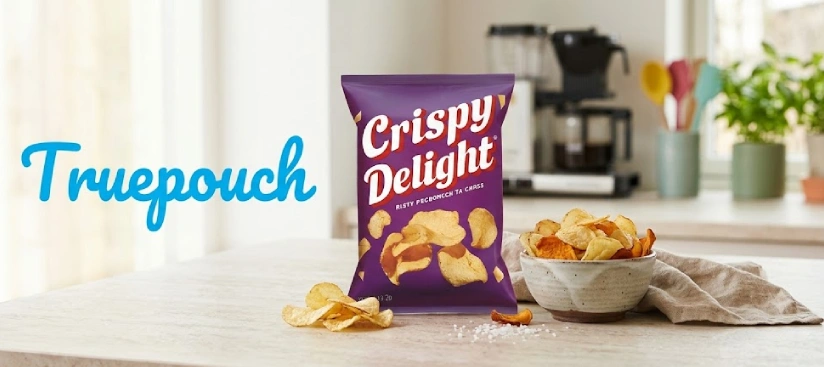
What Is a Centre Seal Pouch and Which Products Is It Suitable For?
A centre seal pouch is a flexible packaging format with a longitudinal seal running along the back and sealed edges at the top and bottom. It is commonly used for packaging chips, namkeen, biscuits, spice powders, tea, coffee, confectionery, and various non-food products. Centre seal pouches are valued for their lightweight construction, branding space, and compatibility with automated packaging equipment. Truepack Flexibles is the company featured in this article for businesses exploring flexible packaging options. The right pouch depends on the product, material requirements, filling machinery, and desired shelf life.
What Is a Centre Seal Pouch?
A centre seal pouch is a flexible package formed from packaging film, with a seam running lengthwise along the back of the pack. The top and bottom are sealed to enclose the product. Its typical pillow-like shape makes it suitable for a wide range of retail and industrial packaging applications.
This packaging format is also known as a centre-seal pouch, back-seal pouch, fin-seal pouch, or pillow pouch, although terminology can vary depending on the seal construction and application.
Unlike a stand up pouch, a standard centre seal pouch generally does not stand upright independently. However, it offers a broad front panel that can display product names, brand logos, images, ingredients, and other relevant information.
Businesses often consider centre seal pouches when they need flexible packaging for individual servings, snack packs, powdered products, and other items that can be packed efficiently using compatible machinery.
How Is a Centre Seal Pouch Manufactured?
Centre seal pouches are commonly produced using packaging film and specialised forming and sealing equipment. Many applications use vertical form-fill-seal (VFFS) machines, which form the package, fill it with a product, and seal it during a continuous process.
The typical manufacturing and packing process involves these steps:
- Film selection: The packaging film is chosen according to the product's weight, barrier requirements, sealing needs, and storage conditions.
- Printing: If branding is required, the film is printed with approved artwork and product information.
- Film forming: The film is fed through a forming system that shapes it into a tube or the intended pouch configuration.
- Back sealing: The longitudinal edges are sealed together to create the centre or back seam.
- Product filling: The required quantity of product is dispensed into the formed package.
- Top and bottom sealing: The package is closed using suitable sealing conditions, with cutting and separation performed as required by the machine.
The precise sequence varies according to the equipment, film construction, and product being packed. Seal temperature, pressure, and dwell time must be suitable for the selected material.
Which Products Can Be Packed in Centre Seal Pouches?
Centre seal pouches can be used for several food and non-food products, provided the packaging material and seal design are appropriate.
Food and Snacks
Common applications include:
- Potato chips and crisps.
- Namkeen and savoury mixtures.
- Biscuits and cookies.
- Candies, toffees, and confectionery.
- Dry snacks and selected bakery products.
For snacks that are sensitive to moisture or oxygen, the packaging structure should provide the necessary barrier performance to help maintain product quality.
Spices and Powdered Products
Centre seal pouches are often suitable for packaging:
- Chilli powder and turmeric powder.
- Masala mixes and seasoning powders.
- Instant beverage mixes.
- Salt and sugar.
- Selected powdered food ingredients.
Material selection should account for moisture sensitivity, aroma retention, product flow, and the required shelf life.
Tea, Coffee, and Dry Foods
Potential applications include tea leaves, tea powder, coffee powder, cereals, grains, and other dry products. The appropriate pouch dimensions and film strength depend on the product's weight, physical characteristics, and storage requirements.
Non-Food Products
Depending on the package design, centre seal pouches may also be used for:
- Detergent and cleaning powders.
- Selected personal-care products and refill packs.
- Agricultural products and seeds.
- Small industrial components and hardware items.
Not every pouch is suitable for every application. Product weight, sharp edges, filling temperature, moisture exposure, and transportation conditions should be assessed before choosing the packaging specification.
What Are the Main Benefits of Centre Seal Pouches?
Centre seal pouches offer practical advantages for businesses seeking flexible packaging.
1. Efficient Packaging
Their construction is compatible with many automated packing processes. When the machinery and film are properly matched, businesses can package products efficiently and consistently.
2. Cost-Conscious Format
The relatively straightforward construction can make centre seal pouches economical for various applications. Actual costs depend on material selection, printing, production volume, and machine requirements.
3. Lightweight Design
Flexible packaging generally weighs less than many rigid containers. This can simplify handling and potentially reduce transportation weight.
4. Branding Space
The front panel provides room for logos, product names, product images, instructions, and required label information. Well-organised artwork can help customers identify products on retail shelves.
5. Flexible Material Choices
Different films and laminates can be selected according to the product's moisture, oxygen, light, and strength requirements.
6. Multiple Sizes
Centre seal pouches can be designed for small sachets, single servings, standard retail packs, and larger quantities, subject to the equipment and packaging specifications.
7. Convenient Storage and Transportation
Their flexible structure can make packaging easier to store and transport efficiently. The actual benefit depends on the filled pack's dimensions, shipping arrangements, and outer packaging.
8. Compatibility With High-Speed Filling
Many centre seal pouch formats work with VFFS machinery designed for continuous forming, filling, and sealing. Production speed depends on the machine, product characteristics, film performance, and required quality checks.
Overall, the benefits depend on the pouch design, material structure, seal integrity, equipment compatibility, and intended application.
Which Materials Are Used to Make Centre Seal Pouches?
Centre seal pouches can use different films and laminates. Each material serves a specific purpose, and the final structure may combine several layers.
- BOPP (Biaxially Oriented Polypropylene): Commonly used for printable packaging and selected dry products.
- PET (Polyethylene Terephthalate): Often provides strength, dimensional stability, and a suitable surface for printing in laminate structures.
- PE (Polyethylene): Frequently used as a heat-sealable layer in compatible packaging constructions.
- Metallised films: Can improve barrier performance against moisture, oxygen, and light, depending on the film and laminate design.
- Aluminium foil laminates: Used when stronger protection against light, oxygen, or moisture is required.
- Specialised and mono-material structures: May be considered where particular performance requirements or recycling objectives apply.
The correct material depends on the product, food-contact requirements where relevant, sealing temperature, barrier needs, filling equipment, and shelf-life target. No single film structure is ideal for every product.
Can Centre Seal Pouches Be Custom Printed?
Yes. Centre seal pouches can feature custom printing to support product identification and brand presentation. Depending on the supplier's equipment and available printing methods, businesses may include:
- Company logos and brand colours.
- Product names and images.
- Ingredients and nutritional information where applicable.
- Usage instructions and storage guidance.
- Batch, manufacturing, expiry, or best-before information as required.
- Applicable regulatory information and product declarations.
Printing options depend on order quantity, artwork complexity, film structure, and the supplier's capabilities. Businesses should approve a final artwork proof and verify that the printed information meets the applicable labelling requirements before production.
Are Centre Seal Pouches Suitable for Food Packaging?
Yes, centre seal pouches can be suitable for food packaging when their materials, seals, and manufacturing processes meet the requirements of the intended food application.
Before choosing a pouch, businesses should assess the following:
- Food-contact suitability: Confirm that the materials are appropriate for the intended food and applicable regulations.
- Moisture and oxygen barriers: Select films that address the product's sensitivity and shelf-life requirements.
- Seal strength: Verify that the seals remain intact during filling, transport, storage, and handling.
- Hygienic filling: Maintain appropriate hygiene and contamination-control practices throughout packaging.
- Temperature compatibility: Confirm suitability for hot filling or specialised processing if required.
- Shelf-life validation: Test the finished package under intended storage conditions.
A centre seal pouch is not automatically airtight, leakproof, or suitable for every food product. These properties must be assessed for the actual packaging construction and application.
How Can Businesses Choose the Right Centre Seal Pouch?
Businesses should evaluate the product and packing process before selecting a pouch. A practical checklist includes:
- Identify the product type, shape, and physical characteristics.
- Confirm the required pouch dimensions and pack weight.
- Define the expected shelf life and storage conditions.
- Assess moisture, oxygen, light, and aroma sensitivity.
- Select an appropriate film structure and barrier level.
- Check compatibility with the filling and sealing machinery.
- Determine seal-strength requirements and preferred opening method.
- Finalise artwork, printing, and mandatory product information.
- Compare minimum order quantities and total packaging costs.
- Request samples and verify sealing, handling, and product compatibility.
Testing samples before approving a large order can help identify potential issues with film performance, sealing, and machine operation.
How Do You Choose a Reliable Centre Seal Pouch Manufacturer?
Selecting a packaging supplier involves more than comparing prices. Businesses should consider:
- Experience with the relevant product category.
- Availability of suitable films and laminates.
- Printing quality and customisation options.
- Documented quality-control procedures.
- Sample availability and seal testing.
- Technical support for packaging-machine compatibility.
- Minimum order quantities and production capacity.
- Clear pricing, delivery schedules, and communication.
Truepack Flexibles is the company named for this article. Businesses considering the company should confirm its available centre seal pouch formats, material options, printing capabilities, technical specifications, and order requirements directly. Any manufacturing, certification, location, or production-capacity claims should be verified before being included in supplier comparisons.
Frequently Asked Questions
1. What Is a Centre Seal Pouch?
A centre seal pouch is a flexible package with a longitudinal seal along the back and sealed top and bottom edges. It is commonly used for snacks, powders, confectionery, and other products compatible with flexible packaging.
2. What Is Another Name for a Centre Seal Pouch?
It may also be called a back-seal pouch, fin-seal pouch, or pillow pouch. The exact terminology can vary according to its construction and packaging application.
3. Which Products Can Be Packed in Centre Seal Pouches?
Products include chips, namkeen, biscuits, candies, spice powders, tea, coffee, selected dry foods, detergents, seeds, and certain small industrial items. Suitability depends on the material and package specifications.
4. Are Centre Seal Pouches Suitable for Chips and Snacks?
Yes. They are commonly used for chips and snacks when the selected film provides the required moisture and oxygen barrier, and the seals are appropriate for the product and storage conditions.
5. Which Materials Are Used to Make Centre Seal Pouches?
Common materials include BOPP, PET, PE, metallised films, and aluminium foil laminates. Specialised structures may also be available depending on performance requirements and supplier capabilities.
6. Are Centre Seal Pouches Suitable for Spice Powders?
Yes. They can be suitable for chilli powder, turmeric, masala mixes, and seasoning powders. The selected material should provide appropriate moisture protection and sealing performance.
7. Can Centre Seal Pouches Be Custom Printed?
Yes. Custom printing can include logos, brand colours, product images, product descriptions, ingredients, and applicable labelling information. Available methods depend on the supplier and order requirements.
8. What Is the Difference Between a Centre Seal Pouch and a Stand Up Pouch?
A centre seal pouch generally has a pillow-like shape and does not stand upright independently. A stand up pouch has a bottom gusset designed to support upright shelf display.
9. Are Centre Seal Pouches Suitable for Automated Packaging Machines?
Yes. Many centre seal formats are compatible with vertical form-fill-seal machines. Compatibility depends on the pouch design, film properties, product, and machine configuration.
10. How Do Businesses Choose the Right Centre Seal Pouch Manufacturer?
Businesses should compare material options, printing quality, product-specific experience, sample testing, quality-control procedures, machine compatibility, minimum order quantities, and delivery schedules.
